Best Water Softeners UK 2026: What Owners Actually Recommend

Last updated: 2026-07 · Rankings built from real owner discussions — every source linked below.

If you live in a hard-water area — most of south-east England, the Midlands, East Anglia and large parts of Yorkshire — a water softener is one of the few home upgrades that owners consistently say they would buy again. On UK forums, the recurring themes are the same: no more furred-up kettles and shower screens, less soap and detergent used, and boilers and appliances that last longer. Every recommendation below comes from tracing what installers and owners actually say in public threads — the research trail beneath shows exactly how many sources back this guide.

Rather than repeating manufacturer marketing, this guide is built around what real UK owners say in community discussions on PistonHeads, Mumsnet, MoneySavingExpert and UK plumbing forums. The clear pattern: premium dealer-installed twin-cylinder units from Harvey and Kinetico are the most praised for reliability, but they typically cost £1,500–£2,500 installed and are not sold on Amazon. Plenty of owners — and plumbers — point out that a metered electric softener from BWT, Monarch or Tapworks does the same basic job for a fraction of the price if you are happy to fit it yourself or pay a local plumber.

Below are the five best softeners you can actually buy on Amazon UK in 2026, ranked with honest pros and cons drawn from owner reviews and forum threads. All are ion-exchange (salt-based) softeners — the only type that genuinely removes hardness minerals rather than just conditioning the water.

At a glance

# Product Best for Price Rating Link
1 Monarch Water Ultimate Midi HE Water Softener (22mm kit) Best Overall £500–£700 4.6/5 View →
2 BWT WS355 Standard Electronic Water Softener, 14 Litre Best Salt-Based Big Brand £550–£800 4.3/5 View →
3 Tapworks AD11 Water Softener with Full Installation Kit Easiest Install £450–£600 4.2/5 View →
4 Water2Buy EASY W2B200 Water Softener Best Budget (See Caveats) £300–£450 3.9/5 View →
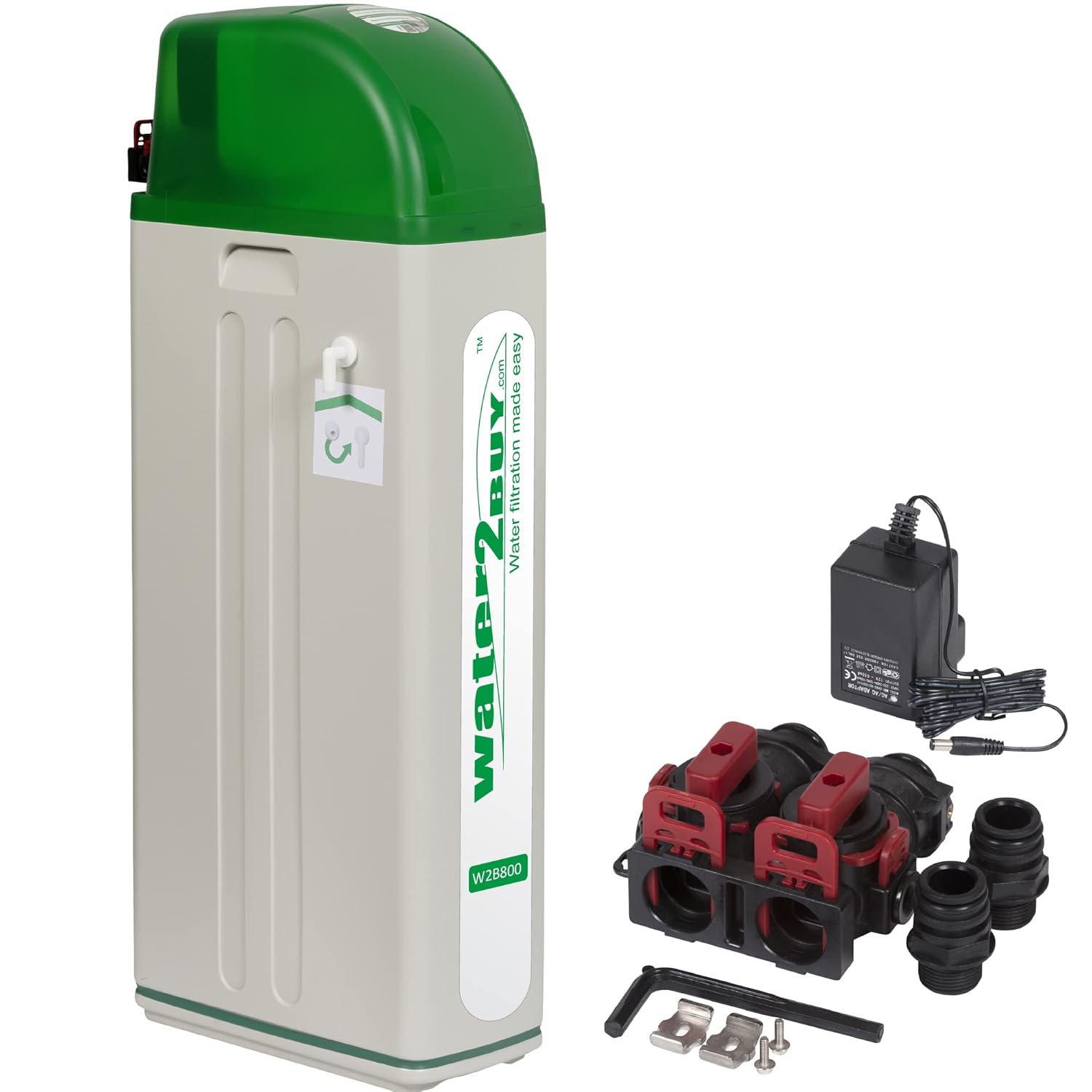
5 Water2Buy EASY W2B800 Water Softener High Capacity (See Caveats) £400–£600 4.0/5 View →

The best water softeners in 2026

1 Best Overall
4.6

Monarch Water Ultimate Midi HE Water Softener (22mm kit)

£500–£700

A British-built, WRAS-approved metered softener suitable for households of up to six or seven people, sold with a full 22mm installation kit (braided hoses, bypass, drain hose and a water hardness test kit) plus 10kg of tablet salt. Its Opti-Brining technology only regenerates the resin actually used, which Monarch says cuts water use by up to 24% and salt by around 12% a year. Backed by a 7-year parts and 2-year labour warranty from a company still actively trading and supporting its products in the UK.

Pros

  • WRAS-approved and British-built, with a 7-year parts warranty
  • High flow rates (up to 78 LPM) suit combi boilers and pressurised systems
  • Efficient metered regeneration keeps salt and water costs down
  • Complete installation kit included — nothing extra to buy

Cons

  • Dearer than budget rivals — some retailers list it £550–£900
  • Needs a mains socket, unlike non-electric Harvey/Kinetico units
  • Cabinet is fairly bulky for a compact under-sink cupboard

What owners say

Monarch comes up repeatedly as the sensible-money choice: a PistonHeads owner recommended Monarch after having 'no problems' with their Midi HE, and a plumber on PlumbersForums said Tapworks or Monarch can be fitted for half the price of the premium brands and do the same job.

Sources: PistonHeads: Water Softener - Kinetico or BWT · PlumbersForums: Which water softener? · Water Filter Geek: Monarch Midi HE review

Check price on Amazon
2 Best Salt-Based Big Brand
4.3

BWT WS355 Standard Electronic Water Softener, 14 Litre

£550–£800

BWT is Europe's biggest water treatment company, and the WS355 is its mainstream UK metered softener: a 14-litre resin unit that takes block or tablet salt, flows at 10–30 L/min and uses a modest 1.2–2.4kg of salt per regeneration. It comes with a 15mm fitting kit and a strong 5-year parts / 2-year labour at-home warranty. A good choice if you want a big-brand electric softener with proper UK support at roughly a quarter of the cost of a dealer-installed twin-cylinder system.

Pros

  • 5-year parts and 2-year labour at-home warranty
  • Takes cheaper tablet salt as well as block salt
  • Frugal salt use per regeneration (1.2–2.4kg)
  • Huge parent company — spares and support are easy to find

Cons

  • Needs mains power, and softening pauses during regeneration (single cylinder)
  • At 602mm tall it will not fit every kitchen cupboard
  • Some trade voices prefer Kinetico/Harvey for long-term reliability

What owners say

Opinion is genuinely split: a PistonHeads user who was quoted £2,500 by Harvey's bought a BWT metered softener for £500, fitted it himself and was happy, and another owner said their BWT was much cheaper than comparable Kinetico units and works well — but a forum member who sells softeners bluntly said 'I would not get a BWT'.

Sources: PistonHeads: Water Softener - Kinetico or BWT · PistonHeads: Harveys water softener - anything better? · Water Filter Geek: BWT WS555/WS455/WS355 review

Check price on Amazon
3 Easiest Install
4.2

Tapworks AD11 Water Softener with Full Installation Kit

£450–£600

The AD11 is Tapworks' most popular model, a metered softener for households of up to seven people that can soften around 2,266 litres a day and holds a generous 37kg of tablet salt, so you refill it less often. It ships with a complete installation kit including hoses and valves, which is why it is a favourite for competent DIY fitting, and the resin container carries a 7-year warranty. Amazon reviewers say the difference in water softness is noticeable within half a day.

Pros

  • Full easy-fit installation kit in the box
  • Big 37kg salt store means infrequent refills
  • Metered 'demand' regeneration only runs when needed
  • Quiet in operation, well-reviewed by owners

Cons

  • Uses cheap tablet salt but lacks the twin-cylinder 24/7 softening of premium units
  • Larger footprint than compact block-salt softeners
  • Tapworks' UK retail availability comes and goes — check stock and spares

What owners say

Plumbers on UK trade forums name Tapworks alongside Monarch as brands that 'can be fitted for half the price' of the heavily marketed premium softeners while doing the same job, and Amazon owners praise how quickly it makes a noticeable difference.

Sources: PlumbersForums: Which water softener? · Amazon UK customer reviews: Tapworks AD11 · Mr Water Geek: Tapworks softener review

Check price on Amazon
4 Best Budget (See Caveats)
3.9

Water2Buy EASY W2B200 Water Softener

£300–£450

For years the W2B200 was the default budget recommendation in UK forums — a metered electronic softener for up to six people producing around 1,250–1,500 litres of soft water a day, with an app reminder for salt top-ups. Long-term owners report units running well past seven years, and it remains one of the cheapest routes to whole-house soft water. The major caveat: Water2Buy has ceased trading, so buy on price alone and do not count on manufacturer warranty or support.

Pros

  • Usually the cheapest whole-house softener on Amazon UK
  • Compact, quiet, and effective at removing limescale
  • Low maintenance — typically a salt refill about once a month
  • Uses cheap granular/tablet salt

Cons

  • Water2Buy is now closed for business, so warranty and support are effectively gone
  • Trustpilot reviews are mixed, with some reports of failed units and unanswered support requests
  • Instructions and installation are trickier than kit-based rivals

What owners say

Owners are genuinely divided: some report seven-plus years of faultless service and call it the best value for money softener in the UK, while others describe failed units and resin escaping into the plumbing — and with the company having ceased trading, you are on your own if it goes wrong.

Sources: Trustpilot: Water2Buy reviews · Water Filter Geek: W2B200 review · Mr Water Geek: Water2Buy problems to know

Check price on Amazon
5 High Capacity (See Caveats)
4.0

Water2Buy EASY W2B800 Water Softener

£400–£600

The W2B800 is the big-family version of the W2B200: rated for one to ten people, producing up to 3,680 litres of soft water a day and handling very hard water up to 500ppm. Its metered regeneration runs a quiet 30-minute clean cycle (deferred to around 3am) and owners report going five to six weeks per 25kg bag of salt, which makes running costs low for its size. As with the W2B200, the company's closure means no meaningful after-sales support, so it suits confident DIYers hunting capacity per pound.

Pros

  • Huge capacity — genuinely enough for 8–10 person households
  • Efficient on salt for its size (roughly one 25kg bag every 5–6 weeks)
  • Quiet, automatic night-time regeneration
  • Copes with very hard water up to 500ppm

Cons

  • No manufacturer support — Water2Buy has ceased trading
  • Physically large; needs proper space and a drain connection
  • Documentation is thin, so installation favours experienced DIYers or a plumber

What owners say

Reviewers who own the W2B800 say it is worth the price and uses less salt than comparable softeners, though the brand's mixed post-sales reputation and eventual closure mean community sentiment has cooled since its heyday as a forum favourite.

Sources: Trustpilot: Water2Buy reviews · WaterZen: W2B800 review

Check price on Amazon

What real owners say about water softeners

We read through public discussions on Reddit and UK forums so you don't have to. Every quote links to its original thread — click through and read the full conversation.

Across PistonHeads, Mumsnet, MoneySavingExpert and UK plumbing forums, the consensus is that in a hard-water area a salt-based softener is 'totally worth it' — owners repeatedly cite scale-free bathrooms, less detergent, softer skin and longer-lasting boilers. On brands, the premium twin-cylinder units from Harvey and Kinetico get the most glowing long-term reliability reports, but they are dealer-installed at £1,500–£2,500 and many forum regulars — including plumbers — argue a £400–£700 metered electric unit from BWT, Monarch or Tapworks delivers most of the benefit for a quarter of the cost. The main dissent comes from users in modest-hardness areas who question the payback, and those bothered by the slight fall in water pressure some units cause.

“We had a Harvey's installed when we lived in Brighton... Worked brilliantly, never missed a beat in 4 years. We brought it with us to our new home in the midlands and installed with no issues. It's been running fine since moving for another 2 years so far.”
a user on PistonHeads (Homes, Gardens & DIY) View thread →
“I would not get a BWT — a forum member who sells water softeners for a living, recommending Kinetico or Harvey Innova instead.”
a user on PistonHeads (Homes, Gardens & DIY) View thread →
“Harvey's quoted me £2500 so I bought a BWT metered softener from B&Q for £500 and fitted it myself.”
a user on PistonHeads (Homes, Gardens & DIY) View thread →
“A plumber supplied and fitted a Kinetico twin tank non-electric unit. 10 years old and still works fine.”
a user on PistonHeads (Homes, Gardens & DIY) View thread →
“The softener stops the pipes furring up, reduces the amount of washing powder, soap, shampoo we use, the water feels lovely to shower in and rinses clear.”
a user on Mumsnet View thread →
“Tapworks or Monarch can be fitted for half the price and all do the same thing to soften water — save the cash. (close paraphrase of a plumber's advice)”
a plumber on PlumbersForums.net View thread →

Buying guide: how to choose

Check your water hardness first

Softener payback depends almost entirely on where you live. Most of south-east England, London, Kent, East Anglia and swathes of the Midlands and Yorkshire sit well above 200ppm calcium carbonate — firmly 'hard' to 'very hard' — while Scotland, Wales and the north-west are mostly soft already. Your water company publishes hardness by postcode, and most softeners (the Monarch kit, for instance) include a test kit. As one Mumsnet poster put it, it depends where you live and how hard your water is: if you are fighting limescale and plan to stay put for a few years, it is probably worth it.

Sizing: match the softener to your household

Softeners are rated by resin capacity and daily soft-water output. As a rule of thumb, a compact unit like the Water2Buy W2B200 or BWT WS355 covers 1–6 people, the Tapworks AD11 and Monarch Midi HE stretch to 6–7, and a high-capacity unit like the W2B800 suits 8–10. Undersizing means constant regeneration (more salt, more water); oversizing wastes money and space. Also check flow rate — combi boilers and pressurised (unvented) systems need a high-flow softener with 22mm or 28mm connections to avoid a noticeable pressure drop, a complaint that comes up regularly in forum threads.

Salt types and running costs

Ion-exchange softeners use salt to regenerate their resin. Tablet and granular salt are the cheapest per kilo and suit most electric metered units (BWT, Monarch, Tapworks, Water2Buy). Block salt — used by Harvey and Kinetico twin-cylinder machines — is dearer but lighter to handle and easier to store. Budget roughly £5–£10 a month for salt in a typical hard-water household; forum owners report anything from one 25kg bag every 5–6 weeks (W2B800) to a block a month (compact units). Metered 'demand' regeneration, which every softener in this guide uses, is markedly cheaper to run than old timer-based models.

Installation: DIY or plumber?

Every softener here plumbs into your rising main and needs a drain connection and (for electric models) a socket. Kits like the Tapworks AD11 and Monarch Midi HE include hoses, bypass valve and fittings, and a competent DIYer can fit one in an afternoon; otherwise a local plumber typically charges £150–£350. Two rules regardless of model: fit a bypass valve so you can isolate the softener, and keep a hard-water drinking tap in the kitchen — UK guidance is not to drink softened water in homes with infants or people on low-sodium diets, and you should never feed softened water to a traditional copper hot-water cylinder without checking compatibility.

Amazon units vs dealer-installed brands

Harvey and Kinetico dominate forum praise for reliability — non-electric, twin-cylinder, soft water 24/7 — but they are sold through dealers at £1,500–£2,500 installed and are not available on Amazon. The honest community verdict is that a £400–£700 metered electric softener removes the same limescale; what you give up is round-the-clock softening during regeneration, some longevity pedigree, and hand-holding on installation. If you want fit-and-forget and money is no object, get a Harvey or Kinetico quote; if you want 80% of the benefit for 25% of the money, the units above are the way in.

Water Softeners: frequently asked questions

Are water softeners actually worth it in the UK?

In genuinely hard-water areas, owner sentiment is overwhelmingly positive — Mumsnet and PistonHeads threads are full of people saying they are 'totally worth it' and they 'wouldn't go back'. Benefits reported include scale-free kettles, taps and shower screens, less soap and detergent, softer skin (several parents mention improved eczema), and protection for boilers and appliances. In soft or moderately hard areas, the payback is far weaker — check your postcode's hardness before spending anything.

How much does a water softener cost to buy and run in the UK?

Amazon-supplied electric metered softeners run roughly £300–£800 depending on capacity and brand, plus £150–£350 if you pay a plumber to fit one. Dealer-installed twin-cylinder systems from Harvey or Kinetico typically cost £1,500–£2,500 installed. Running costs are modest: budget around £5–£10 a month for salt, plus a small amount of water used during regeneration.

Can you drink softened water?

Softening swaps calcium and magnesium for a small amount of sodium. In most UK homes the result stays within drinking limits, but official guidance is to keep a separate hard-water drinking tap — which most installers fit as standard — and not to use softened water for baby formula or for people on medically restricted sodium diets. Very hard source water (over about 400ppm) can push softened water past the sodium limit.

What is the difference between electric and non-electric softeners?

Electric metered softeners (BWT, Monarch, Tapworks, Water2Buy) use a small controller to track water use and trigger regeneration; they are cheaper to buy but briefly stop softening while they regenerate. Non-electric twin-cylinder softeners (Harvey, Kinetico) use water pressure to run and regenerate one cylinder while the other keeps working, so you get soft water 24/7 with no plug — but at two to four times the price. Forum plumbers are split on whether that premium is worth it.

Will a water softener remove existing limescale from my pipes and boiler?

Gradually, yes. Softened water is slightly aggressive to existing scale, so deposits in pipework, cylinders and heat exchangers slowly dissolve over weeks and months — owners commonly report kettles and shower heads coming clean within days, and heating engineers note improved boiler efficiency over time. It will not instantly undo years of buildup, and a badly scaled heat exchanger may still need a chemical descale or powerflush.

What size water softener do I need?

Match capacity to occupants and hardness: 1–4 people in typical hard water suits a compact 10–14 litre resin unit (W2B200, BWT WS355); 4–7 people or very hard water suits a mid-size unit (Monarch Midi HE, Tapworks AD11); and 8+ people need a high-capacity machine like the W2B800. If you have a combi boiler or unvented cylinder, prioritise a high-flow model with 22mm connections so showers do not lose pressure.

From our research

Deeper answers from the same owner-sourced research behind this guide.